A child cannot pretend to drink from an empty cup until they pass the mirror test. That developmental rule exposes the flaw in AI roleplay.

When an engineer prompts a large language model to "act as a senior clinical diagnostician" or "pretend you are a 1970s cinematographer," the vernacular of the instruction hides a profound cognitive claim. We talk as if the model is engaging in pretend play—stepping out of its default state into a counterfactual persona. Yet developmental psychology tells us that pretending is not a cheap trick of surface mimicry. It requires a specific, measurable architecture of the self that current generative systems do not possess.
The Mirror and the Empty Cup
In developmental psychology, the emergence of the self-concept is tracked through a classic behavioural milestone: the "dot and mirror" test, originally devised by Gordon Gallup (1977) for primates. Researchers place an unscented mark on an infant’s forehead where it cannot be seen directly, then place the child in front of a mirror. Before roughly 15 months of age, infants treat the reflection as another child. By 18 to 24 months, almost all children use the mirror to reach up and touch the mark on their own forehead (Lewis & Ramsay, 2004). They have established the boundary between "me" and "not me."
What Michael Lewis and Douglas Ramsay (2004) demonstrated in their longitudinal study of 15- to 21-month-old infants is what rides on the back of that boundary. Alongside mirror self-recognition, they tracked the onset of personal pronouns (I, me, mine) and the emergence of pretend play—actions like feeding a doll imaginary food or drinking imaginary liquid from an empty cup.
Their finding was strict: only those children who exhibited self-recognition in a mirror were capable of pretend play.
The mechanism is structural. To pretend to drink from an empty cup, a child must hold two distinct epistemic states in mind simultaneously and police the border between them: "this is what I am actually doing" (holding dry plastic to my lips) and "this is what I pretend to be doing" (drinking tea). Without a represented self anchored in actual reality, the counterfactual collapses. If you do not know what you are actually doing, you cannot pretend; you can only hallucinate or execute a blind behavioural sequence.
Covariation Without a Counterfactual Boundary
This developmental constraint sharpens the philosophical problem of mental representation raised by theorists like Stephen Stich and David Papineau. As Papineau argues, a system does not genuinely represent the world merely because its internal states covary with external conditions, the way a thermometer covaries with heat. Genuine representation requires conditions of satisfaction—the capacity to evaluate a state against reality and register when it goes wrong.
When an LLM is instructed to "pretend," it has no mirror state. It has no anchor representing "what I actually am doing" from which to measure the departure into "what I pretend to be doing." Every token prediction—whether outputting factual database queries, roleplaying a historical persona, or confabulating a non-existent court case—occurs on the exact same flat plane of statistical covariation. Because the model lacks an epistemic boundary between reality and simulation, it cannot tell when its "pretending" bleeds into its factual assertions, or when a visual upscale invents an object that was never in the scene.
Engineering the Missing Boundary
In production systems, pretending that an AI understands the difference between fidelity and invention is how pipelines break. If the model cannot hold the boundary between what is and what is imagined internally, the architecture around it must enforce that boundary externally.
In NeuraScene, we do not ask the generative model to "pretend" to be a period camera while trusting its internal judgement to keep the history straight. We split the cognitive labour:
- The Anchored Reality (What Actually Is): Our deterministic ontology and
HISTORICAL_TECH_MAPact as the rigid external ground truth, restricting lenses, film stocks, and physical lighting rules to what materially existed in a given era. - The Quantified Departure (The Fidelity Dial): In our image refinement workflow, we expose the boundary as a hard mathematical parameter: a strict default temperature of
0.15paired with an explicit "Restoration Creativity" slider from0.0to1.0.
At 0.15, the system is locked to strict optical fidelity, preventing the model from hallucinating flaming candles or phantom details into shadows. When a director dials that slider up, the counterfactual departure is no longer an opaque accident inside a black box. Because the machine has no self to separate truth from play, the console must draw the line in code.
Method note. This piece was built in NeuraScene's Advertising Mode using an explicit psychological frame:
- Persuasion trigger: Anchoring
- Target affect: Cognitive Ease
- Gestalt principle: Symmetry and Order
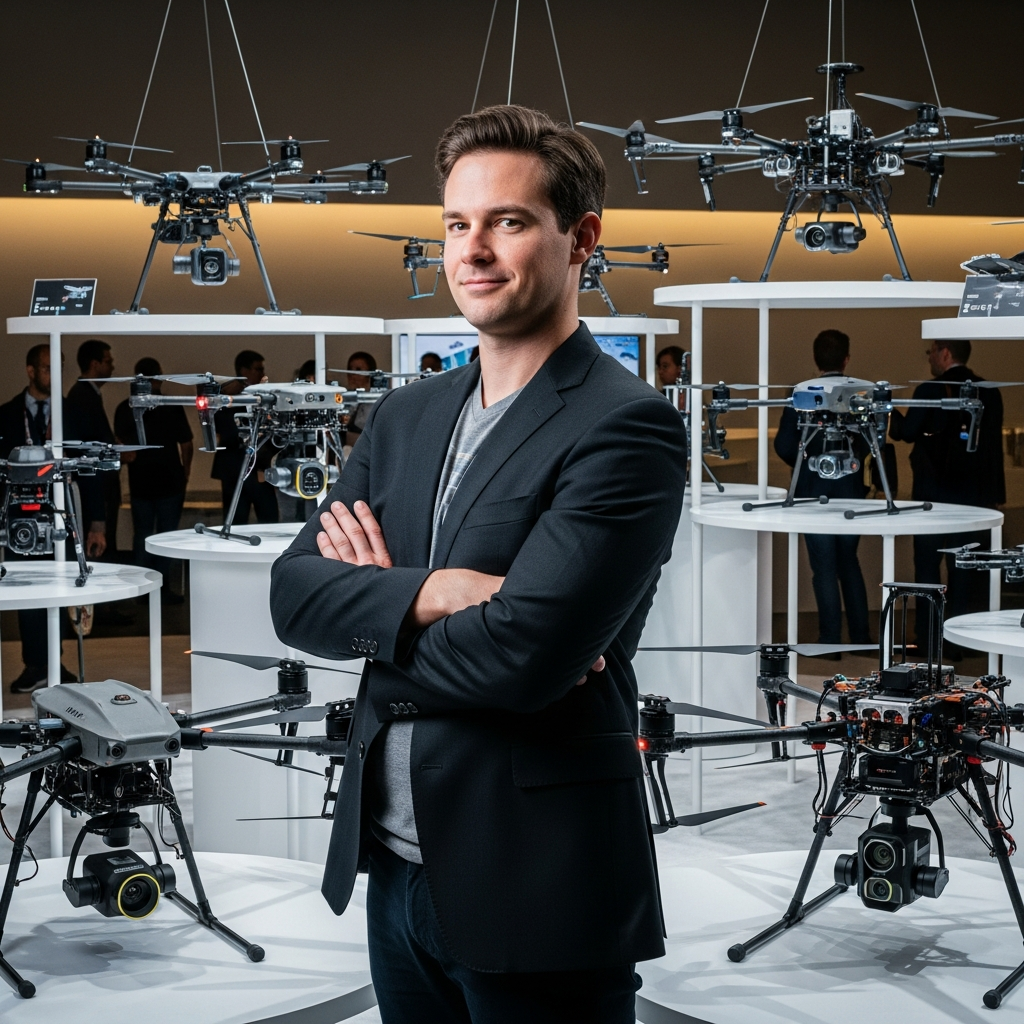
Anchoring the technical argument in a concrete developmental milestone (the 18-month mirror and pretend-play threshold) gives sceptical readers a firm empirical reference point before introducing NeuraScene's 0.15 temperature baseline. Bilateral Symmetry and Order in the visual composition physically embodies the mirror-test duality between actual state and counterfactual simulation, promoting Cognitive Ease as the reader parses a dense philosophical distinction.