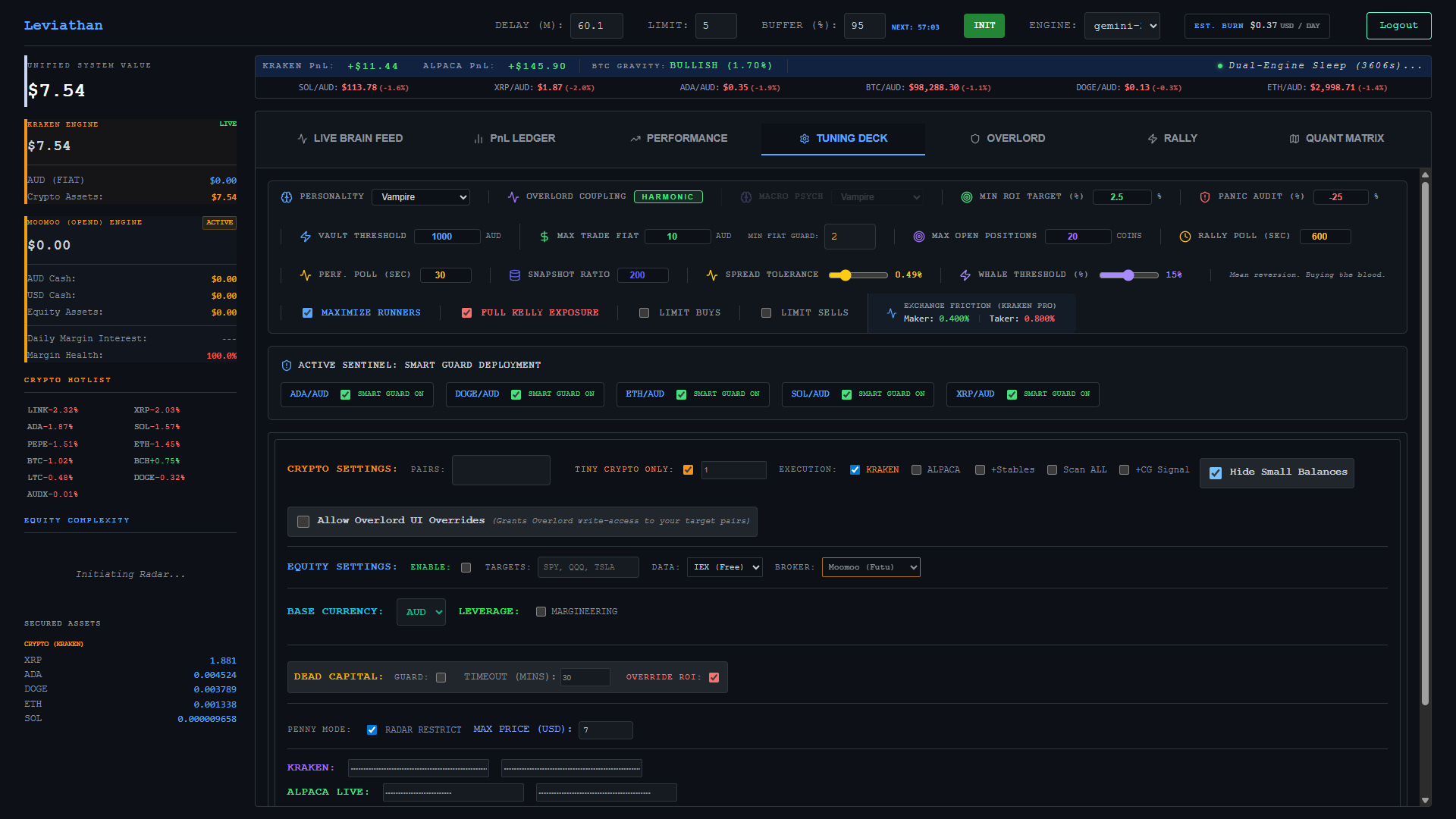
The convergence of large language models, deep reinforcement learning, and decentralized market infrastructure has catalyzed a profound paradigm shift in quantitative finance. The financial landscape of the modern era is characterized by immense scale and velocity; the total cryptocurrency market capitalization surpassed the four trillion dollar threshold for the first time in 2025, driven by institutional adoption from traditional incumbents such as BlackRock and Fidelity, and powered by blockchain infrastructures capable of processing thousands of transactions per second.40 In this high-stakes environment, where stablecoins autonomously process trillions of dollars in annual transaction volume rivaling traditional payment networks, algorithmic trading applications must evolve beyond deterministic rulesets.40 Traditional quantitative trading approaches, which rely heavily on static statistical models, exhibit a limited capacity to synthesize heterogeneous data streams or adapt to the rapid market regime shifts that characterize both modern equities and digital assets.1
To maximize the intelligence and profit-making effectiveness of an automated trading application operating across both traditional equities and cryptocurrency markets, a fundamental architectural evolution is required. This analysis provides an exhaustive evaluation of state-of-the-art technological integrations, algorithmic enhancements, and regulatory compliance frameworks necessary to elevate a retail or institutional trading application into a resilient, autonomous, and highly profitable enterprise-grade system.
1. Advancing the Cognitive Architecture of Trading Systems
The foundation of a highly effective automated trading application must transition from a monolithic machine learning model to an advanced, multi-layered cognitive architecture. Historically, automated decision-making processes were developed to address the limitations of human cognition, a concept formalized by Herbert Simon's bounded rationality theory in 1957, which highlighted the biological constraints of processing vast, multi-dimensional data.41 Building upon the foundational computational theories established by Alan Turing in the 1950s, the modern genesis of generative artificial intelligence has fundamentally transformed the extraction of signal from financial noise.2 However, to optimize operational intelligence, the architecture must systematically integrate large language models for semantic reasoning, multi-agent systems for collaborative intelligence, and deep reinforcement learning for adaptive, execution-level decision-making.1
1.1 The Multi-Agent Expert Ecosystem and Sovereign Intelligence
Empirical evidence from contemporary financial studies demonstrates that coarse-grained instructions provided to a single artificial intelligence agent invariably result in severe performance degradation and logical hallucinations, particularly in complex, high-stakes environments.42 When an application relies on a generalized model, the instructions often lead to surface-level outputs lacking the interpretability required by human oversight managers.42 To counteract this, the system must deploy a hierarchical multi-agent framework—utilizing advanced orchestrators like LangGraph, CrewAI, or AutoGen—that mirrors the precise, compartmentalized workflows of institutional investment teams.43
This ecosystem relies on a highly structured Mixture-of-Experts approach, utilizing specialized agents coordinated through a central orchestrator or a router mechanism.3 By implementing a real-time evaluation and ranking mechanism within specific agent teams (such as dedicated "Data" and "Research" squads), driven by authentic market feedback, the system ensures that only the outputs from the highest-performing agents are adopted into the final trading strategy.44 This internal competitive mechanism adaptively adjusts to dynamic environments and enhances robustness against sudden market volatility.44
At the execution level, the application should integrate "Sovereign Intelligence" architectures, such as the Edge-Local-Cloud model, which routes computation based on privacy sensitivity to ensure proprietary trading intent is never exported to public clouds. Furthermore, the implementation of "Leviathan" architectures—which replace discrete embedding matrices with continuous token generators—can drastically improve the model's spatial reasoning over complex cryptographic and financial data structures.
Agent Role | Primary Function and Data Processing Responsibility | Communication Protocol |
Technical Agent | Processes price-action, volume, order-flow data, and technical indicators. Identifies local support, resistance, and momentum shifts. | Directed Acyclic Graph (DAG) / Microservices |
Quantitative Agent | Executes statistical arbitrage formulas, calculates volatility regimes, and assesses complex multi-factor models. | Directed Acyclic Graph (DAG) / RESTful APIs |
Qualitative Agent | Analyzes corporate filings, fundamental tokenomics, and subjective market data. | DAG / Schema-Constrained Decoding |
Macroeconomic Agent | Analyzes global interest rates, inflation metrics, and alternative datasets to determine broader liquidity cycles and systemic risks. | Round-Robin Debate / Group-Chat |
News & Sentiment Agent | Processes unstructured text and multimodal data streams to extract behavioral market sentiment and narrative entropy. | Asynchronous Message Bus |
Risk & Compliance Supervisor | Monitors maximum drawdowns, enforces exposure limits, and ensures strict adherence to predefined regulatory parameters. | Central Supervisor Override |
To ensure complete interpretability, each agent must formulate predictions via a structured Chain-of-Thought (CoT) prompt, requiring explicit articulation of reasoning, uncertainty, and confidence levels. This creates an immutable audit trail for compliance while drastically minimizing model hallucinations.
1.2 System Decoupling via the Model Context Protocol
To enable these autonomous artificial intelligence agents to interact with external environments dynamically, without relying on brittle, hard-coded software integrations, the application architecture must leverage the Model Context Protocol.4 The Model Context Protocol functions as a standardized communication layer, allowing language model-based agents to securely discover and interact with real-time data sources and execution engines utilizing a JSON-RPC 2.0 protocol executed over Streamable HTTP.20
By implementing these servers natively, the agents gain autonomous capabilities to execute functions across local and cloud environments.6 The application can utilize powerful community-driven MCP servers—such as mcp-stock-news for equities, hyperliquid-mcp for on-chain derivatives, or freqtrade-mcp for direct bot execution.7 In the crypto sector, connecting to the Nansen MCP grants agents immediate access to 24 distinct analytical tools, allowing them to autonomously execute queries like smart_traders_and_funds_token_balances or token_dex_trades based on natural language reasoning.20 This decoupling of the artificial intelligence reasoning engine from the underlying data fetching mechanism drastically improves system scalability.5
2. Deep Reinforcement Learning and Algorithmic Optimization
While large language models are unparalleled in processing semantic context and generating hypotheses, the ultimate financial execution policy must be mathematically governed by a Deep Reinforcement Learning algorithm. Advanced algorithms such as Proximal Policy Optimization and the Deep Deterministic Policy Gradient excel at dynamic asset weight adjustment, optimizing portfolios through continuous learning derived from highly randomized, simulated financial scenarios.1
2.1 Reinforcement Learning Architectures in Portfolio Management
The application must replace traditional, static mean-squared error loss functions with a novel Sharpe ratio reward function engineered specifically for Actor-Critic deep reinforcement learning algorithms.9 This engineering ensures stable convergence during the neural network training phase while consistently guiding the algorithm toward positive risk-adjusted returns.9 The integration of a Time-series Dense neural network architecture allows the reinforcement learning model to process complex, multi-dimensional financial time-series data without discarding temporal significance.9
To refine regime-switching capabilities, the system should calculate the time-varying Hurst Exponent :

combined with Ornstein-Uhlenbeck processes. By analyzing this long-term dependence metric through advanced machine learning classifiers like LightGBM, the system can predict transitions between low, moderate, and high volatility regimes with up to 91% accuracy, feeding this precise classification directly into the reinforcement learning orchestrator.
2.2 Hierarchical Risk Parity for Structural Diversification
Traditional mean-variance optimization, a cornerstone of Modern Portfolio Theory formulated by Harry Markowitz in 1959, requires the inversion of a return covariance matrix.11 In highly correlated and volatile markets—particularly the cryptocurrency sector—this strict mathematical requirement introduces severe noise-induced instability, resulting in highly concentrated, fragile portfolios that frequently collapse out-of-sample.12
Hierarchical Risk Parity, developed by Marcos Lopez de Prado, directly addresses the concentration, instability, and underperformance pitfalls of standard optimization.13 This approach applies advanced graph theory and hierarchical clustering to allocate capital, ensuring that the portfolio is diversified across actual sources of behavioral risk rather than naively distributing capital across mathematically adjacent assets.13
The algorithmic implementation of Hierarchical Risk Parity is operationalized in three distinct mathematical steps 15:
Tree Clustering: The algorithm transforms the correlation matrix of the chosen asset universe into a distance matrix, forcing highly correlated assets to compete for capital within the same localized branch.14
Quasi-Diagonalization: The underlying covariance matrix is reorganized iteratively so that highly correlated investments are placed adjacently along the diagonal.15
Recursive Bisection: The algorithm traverses the hierarchical tree from the top down, splitting weights equally at each node based on the inverse variance of the respective clusters.11
Integrating Python libraries such as PyPortfolioOpt into the application's backend enables rapid, programmatic computation of these weights, consistently generating portfolios with superior out-of-sample robustness.45
2.3 The Kelly Criterion for Dynamic Position Sizing
Once the Hierarchical Risk Parity algorithm determines the ideal allocation distribution based on systemic risk, the platform must ascertain the optimal leverage and absolute capital exposure for the portfolio. The Kelly Criterion provides an unparalleled mathematical framework for sizing positions to maximize the expected logarithmic growth of wealth over time.10 Because the strict Kelly fraction mathematically optimizes for maximum long-term growth at the expense of high short-term volatility, the application should programmatically enforce a fractional Kelly approach—commonly referred to as the half-Kelly criterion—which maximizes median terminal wealth while limiting the probability of catastrophic drawdowns.13
3. High-Fidelity Data Infrastructure and Macroeconomic Integration
A multi-asset automated system is fundamentally constrained by the quality, breadth, and latency of its market data streams. Generating predictive alpha requires the seamless fusion of traditional macroeconomic indicators, corporate fundamentals, real-time exchange data, and alternative sentiment metrics.18
3.1 Macroeconomic Indicators, Alternative Data, and Narrative Entropy
Cryptocurrency price shocks generate substantial positive financial market spillovers, accounting for approximately eighteen percent of equity market variance and contributing heavily to price-level inflation forecasts.46 By feeding these macroeconomic inputs into bidirectional long short-term memory (Bi-LSTM) networks, the system can achieve remarkably low root mean squared errors in price prediction.47
Beyond standard macroeconomics, the application must ingest unique alternative data signals. By integrating GitHub developer activity metrics, the system can track the velocity of code commits and newly active developers on blockchain repositories, turning fundamental project momentum into a quantitative trading signal. Furthermore, the News & Sentiment Agent must quantify "Narrative Entropy." By utilizing Shannon entropy and fuzzy entropy to measure the unpredictability and dispersion of financial news narratives, the application can detect thematic regime shifts and structural anomalies, which have been proven to enhance industry-group return forecasting and capital rotation strategies.
3.2 Architecting the Data Aggregation Pipeline
To support high-frequency algorithmic strategies and deep historical backtesting globally, the application must integrate a tiered API architecture.18
Data Provider / API | Primary Analytical Use Case and System Optimization | Data Type and Delivery Mechanism |
Financial Modeling Prep (FMP) | Fundamental corporate insights, valuation modeling, and equity dashboard analytics. | RESTful API / Historical & Snapshot 19 |
EOD Historical Data (EODHD) | Deep quantitative backtesting, long-term multi-market coverage, and structural volatility analysis. | RESTful API / Deep Historical 19 |
Alpha Vantage | Rapid algorithmic prototyping, integration of built-in technical indicators, and real-time forex pricing. | RESTful API / Indicator Endpoints 19 |
Massive (formerly Polygon.io) | High-frequency trading execution, options pricing, and real-time tick-level event streaming. | WebSocket / Tick-Level Streaming 48 |
Nasdaq Data Link | Economic modeling, alternative dataset processing, and academic-grade macroeconomic inputs. | RESTful API / Macro & Alternative 19 |
For comprehensive coverage of the Australian Securities Exchange, generalized global APIs are often insufficient.18 The application must integrate directly with localized, high-performance providers like ASX MarketSource to capture incremental, low-latency broadcasts of best bid and offer (Level 1) and full-depth order book (Level 2) data.49 For execution, connecting through the Interactive Brokers API offers institutional-level access, custom automation, and regulatory-compliant connectivity to domestic exchanges.50
4. Exploiting Cryptocurrency Asymmetries: On-Chain Analytics and Sentiment
While traditional equities rely heavily on quarterly earnings and delayed regulatory filings, cryptocurrencies operate on fully transparent public ledgers. An intelligent automated trading application must exploit this fundamental asymmetry by integrating raw on-chain data to track the exact movements of sophisticated market participants.51
4.1 On-Chain Analytics and "Smart Money" Tracking
The platform's analytical intelligence can be vastly improved by integrating institutional-grade on-chain analytics platforms, such as the Nansen API, which applies proprietary, human-readable data labeling to hundreds of millions of pseudonymous blockchain addresses.20 This transformation of raw cryptographic data into actionable intelligence allows the application to understand the specific entities—ranging from market makers to institutional funds—driving market momentum.20
Through dedicated API endpoints, the application's artificial intelligence agents can execute advanced, preemptive strategies. The system can monitor smart money netflows, tracking the precise capital inflows and outflows from historically profitable traders across multiple networks.20 By querying token-level analytics, the system can detect significant accumulation or distribution phases by large-scale holders ("whales") long before these transactions manifest as price movements on retail exchange charts.20
4.2 Multimodal Sentiment Analysis and Information Spillover
Traditional algorithmic sentiment analysis is often restricted to natural language processing of text-based news articles. However, a state-of-the-art trading application must integrate multimodal sentiment analysis, incorporating vocal, textual, and visual cues from a diverse array of platforms, including X (formerly Twitter), Reddit, and video-centric networks like TikTok.23
Using advanced autoregressive decoders, large language models, and domain-specific transformers such as FinBERT, the Sentiment Agent can extract subjective information to dynamically gauge prevailing market dynamics. The scientific literature confirms significant information spillover effects within the cryptocurrency ecosystem, where shocks from dominant assets like Bitcoin act as net transmitters of market volatility to smaller capitalization alternative coins.24
5. Market Execution and Exploitation of Inefficiencies
Theoretical alpha generation is entirely negated if the system suffers from poor execution, high slippage, or structural exploitation by adversarial market participants. The application's core transaction engine must prioritize advanced routing protocols, cross-exchange arbitrage mechanisms, and cryptographic execution protections.
5.1 Smart Order Routing and Liquidity Aggregation
For both equities and digital assets, relying on direct order routing to a single exchange drastically limits available liquidity and substantially increases the probability of slippage, particularly for large algorithmic orders executed during high-volatility events.27 The application must be upgraded to feature a proprietary Smart Order Routing (SOR) engine.25
Smart Order Routing technology continuously monitors and analyzes the full market depth across an array of centralized exchanges (CEXs) and decentralized exchanges (DEXs) in real-time.27 When the artificial intelligence triggers a buy or sell signal, the routing algorithm slices the aggregate order into smaller, optimized fragments—a process technically known as order sweeping.28 It then routes these fragments simultaneously to the venues offering the absolute best immediate bid or ask prices.27 This aggregation methodology effectively merges highly fragmented markets into a single, extraordinarily deep meta-order book.26
5.2 AI-Powered Cross-Exchange Arbitrage Strategies
Cryptocurrency markets remain globally fragmented, presenting continuous, mathematically risk-free arbitrage opportunities across exchanges.21 The application should incorporate dedicated AI-powered arbitrage sub-modules capable of processing vast amounts of real-time exchange data to exploit these pricing inefficiencies before human traders can react.29 The core arbitrage strategies to automate include:
Spatial Arbitrage: Simultaneously buying an asset on one platform where localized supply has temporarily depressed the price, and instantaneously selling it on another platform experiencing excess localized demand.30
Triangular Arbitrage: Exploiting transient pricing inefficiencies between three different currency pairs on the exact same exchange, neutralizing transfer latency risks entirely.30
Statistical Arbitrage: Utilizing deep learning models to detect mean-reverting relationships between historically correlated pairs, executing trades when the price ratio mathematically deviates beyond a predefined standard deviation threshold.30
5.3 Cryptographic Defense Against Maximal Extractable Value (MEV)
In the decentralized cryptocurrency landscape, Maximal Extractable Value poses a severe and continuous threat to algorithmic trading profitability.31 Because standard transactions are publicly broadcast to an open mempool prior to cryptographic block inclusion, highly automated adversarial programs scan the network for profitable retail trades.31 Through aggressive strategies such as front-running and sandwich attacks, these searchers artificially manipulate liquidity pool prices, causing severe execution slippage.31
The application must natively integrate specialized private Remote Procedure Call endpoints that intentionally bypass the public mempool, submitting transactions directly and privately to trusted block builders.31
MEV Protection Infrastructure | Benchmark Success Rate (2025/2026) | Response Latency | Execution Protection Efficacy |
Flashbots Protect | 98.5% | 245ms | Excellent. The industry standard for mitigating front-running. 32 |
MEV Blocker | 96.2% | 180ms | Good. Offers a highly optimized balance between transaction speed and protection. 32 |
Jito Staking / bloXroute | Variable | Low | Excellent specialized protection and rapid execution on networks like Solana. 52 |
Works cited
Adaptive LLM-based multi-agent systems to enhance ... - PeerJ, accessed April 7, 2026, https://peerj.com/articles/cs-3630.pdf
From Turing to Trading: How AI is Revolutionizing Finance, accessed April 7, 2026, https://finance-pillar.wharton.upenn.edu/ai-in-finance/how-ai-revolutionizing-finance/
Specialized Agents in Multi-Agent Systems - Emergent Mind, accessed April 7, 2026, https://www.emergentmind.com/topics/specialized-agents
awesome-mcp-servers/README.md at main - GitHub, accessed April 7, 2026, https://github.com/habitoai/awesome-mcp-servers/blob/main/README.md
TensorBlock/awesome-mcp-servers: A comprehensive collection of Model Context Protocol ... - GitHub, accessed April 7, 2026, https://github.com/TensorBlock/awesome-mcp-servers
zazencodes-season-2/src/mcp-server-analysis/workbook.ipynb at main - GitHub, accessed April 7, 2026, https://github.com/zazencodes/zazencodes-season-2/blob/main/src/mcp-server-analysis/workbook.ipynb
awesome-mcp-servers/docs/finance--crypto.md at main - GitHub, accessed April 7, 2026, https://github.com/TensorBlock/awesome-mcp-servers/blob/main/docs/finance--crypto.md
GitHub - tmstack/mcp-servers-hub: Explore MCP Servers and Clients., accessed April 7, 2026, https://github.com/tmstack/mcp-servers-hub
[2412.18563] A Deep Reinforcement Learning Framework for Dynamic Portfolio Optimization: Evidence from China's Stock Market - arXiv, accessed April 7, 2026, https://arxiv.org/abs/2412.18563
Deep Reinforcement Learning for Optimal Asset Allocation Using DDPG with TiDE - arXiv, accessed April 7, 2026, https://arxiv.org/html/2508.20103v1
portfolio-optimization-book.pdf, accessed April 7, 2026, https://portfoliooptimizationbook.com/portfolio-optimization-book.pdf
PORTFOLIO MANAGER PERSPECTIVES, accessed April 7, 2026, https://www.pm-research.com/content/iijpormgmt/51/8/local/complete-issue.pdf
Model-Free Reinforcement Learning for Financial Portfolios: A Brief Survey - ResearchGate, accessed April 7, 2026, https://www.researchgate.net/publication/332342540_Model-Free_Reinforcement_Learning_for_Financial_Portfolios_A_Brief_Survey
precise/LITERATURE.md at main · microprediction/precise - GitHub, accessed April 7, 2026, https://github.com/microprediction/precise/blob/main/LITERATURE.md
Other Optimizers — PyPortfolioOpt 1.5.4 documentation, accessed April 7, 2026, https://pyportfolioopt.readthedocs.io/en/latest/OtherOptimizers.html
Portfolio Optimization using Risk Rarity Strategies based on Clustering Methods in Python N.A. Jaspert - RUN, accessed April 7, 2026, https://run.unl.pt/bitstreams/2fa852c2-8841-46a0-ba09-4160d66572ce/download
Quantitative Portfolio Management Course - Quantra by QuantInsti, accessed April 7, 2026, https://quantra.quantinsti.com/course/quantitative-portfolio-management
2026 Australian Securities Exchange (ASX) API Integration and Python Quantitative Strategies | by San Si wu | Medium, accessed April 7, 2026, https://medium.com/@wutainfofu/2026-australian-securities-exchange-asx-api-integration-and-python-quantitative-strategies-ad889c1de71a
Top 5 Stock Market Data APIs Every Analyst and Fintech Builder Should Know in 2025, accessed April 7, 2026, https://medium.datadriveninvestor.com/top-5-stock-market-data-apis-every-analyst-and-fintech-builder-should-know-in-2025-c81970996fad
Nansen API: Introduction, accessed April 7, 2026, https://docs.nansen.ai/
The Best Crypto Trading Tools for 2025: Onchain Analytics, Advanced Platforms & AI Insights | Nansen, accessed April 7, 2026, https://www.nansen.ai/post/the-best-crypto-trading-tools-for-2025-onchain-analytics-advanced-platforms-ai-insights
Nansen API, accessed April 7, 2026, https://www.nansen.ai/api
What Role Does Sentiment Analysis Play in AI Crypto Bots - cimaloc, accessed April 7, 2026, https://cimaloc.com/crypto-How-to-Withdraw-Profits-from-Ai-Help-Crypto-in-2026.?What-Role-Does-Sentiment-Analysis-Play-in-AI-Crypto-Bots
Enhancing Cryptocurrency Sentiment Analysis with Multimodal Features - arXiv, accessed April 7, 2026, https://arxiv.org/html/2508.15825v1
Trends in Liquidity Aggregation and Custom Liquidity Pools | FXGT, accessed April 7, 2026, https://fxgt.com/blog/trends-in-liquidity-aggregation-and-custom-liquidity-pools/
Liquidity Tech: Smart Order Routing (SOR) Technology Explained - ChainUp, accessed April 7, 2026, https://www.chainup.com/blog/smart-order-routing-sor-technology-explained/
Smart Order Routing (SOR) in Crypto: Top Providers for 2025 - Finestel, accessed April 7, 2026, https://finestel.com/blog/smart-order-routing/
Liquidity Bridge vs. Aggregator: Key Differences and Use Cases - Spencer Logic, accessed April 7, 2026, https://www.spencerlogic.com/blog/liquidity-bridge-vs-aggregator-key-differences-and-use-cases/
AI-Powered Arbitrage Bots: The Future of Crypto Trading in 2025 - Blockchain App Factory, accessed April 7, 2026, https://www.blockchainappfactory.com/blog/ai-powered-arbitrage-bots-future-crypto-trading-2025/
What is Crypto Arbitrage Trading? A Trader's Guide for 2025 - DcentraLab, accessed April 7, 2026, https://www.dcentralab.com/blog/what-is-crypto-arbitrage-trading-a-traders-guide-for-2025
What Is MEV in Crypto and How Can Retail Investors Avoid Getting Exploited? - KuCoin, accessed April 7, 2026, https://www.kucoin.com/blog/en-what-is-mev-in-crypto-and-how-can-retail-investors-avoid-getting-exploited
Implementing Effective MEV Protection in 2025 | by Ancilar | Blockchain Services - Medium, accessed April 7, 2026, https://medium.com/@ancilartech/implementing-effective-mev-protection-in-2025-c8a65570be3a
Artificial Intelligence in Financial Markets: Systemic Risk and Market Abuse Concerns | Insights | Sidley Austin LLP, accessed April 7, 2026, https://www.sidley.com/en/insights/newsupdates/2024/12/artificial-intelligence-in-financial-markets-systemic-risk-and-market-abuse-concerns
Keeping up with the times –changes to ASIC rules on trading systems and algorithms, accessed April 7, 2026, https://www.ashurst.com/en/insights/keeping-up-with-the-times-changes-to-asic-rules-on-trading-systems-and-algorithms/
How to build an AI trading bot: a complete developer's guide (2026) - Alchemy, accessed April 7, 2026, https://www.alchemy.com/blog/how-to-build-an-ai-trading-bot
Create Your Own AI-Based Trading Signals : r/AItradingOpportunity - Reddit, accessed April 7, 2026, https://www.reddit.com/r/AItradingOpportunity/comments/1s4wiou/create_your_own_aibased_trading_signals/
CLAUDE.md - gr8monk3ys/trading-bot - GitHub, accessed April 7, 2026, https://github.com/gr8monk3ys/trading-bot/blob/main/CLAUDE.md
Best crypto tax software in Australia (2025) - Finder, accessed April 7, 2026, https://www.finder.com.au/cryptocurrency-tax/best-crypto-tax-software
Top 5 Crypto Tax Software in Australia, accessed April 7, 2026, https://cryptonews.com.au/guides/best-crypto-tax-software-australia/
State of Crypto 2025: The year crypto went mainstream, accessed April 7, 2026, https://a16zcrypto.com/posts/article/state-of-crypto-report-2025/
Artificial intelligence techniques in financial trading: A systematic literature review | Request PDF - ResearchGate, accessed April 7, 2026, https://www.researchgate.net/publication/379344947_Artificial_intelligence_techniques_in_financial_trading_A_systematic_literature_review
Toward Expert Investment Teams:A Multi-Agent LLM System with Fine-Grained Trading Tasks - WisPaper, accessed April 7, 2026, https://www.wispaper.ai/zh/blog/expert-investment-multi-agent-llm-system-20260228/eng
Advancing innovation in financial stability: A comprehensive review of ai agent frameworks, challenges and applications, accessed April 7, 2026, https://wjaets.com/sites/default/files/fulltext_pdf/WJAETS-2025-0071.pdf
Daily Papers - Hugging Face, accessed April 7, 2026, https://huggingface.co/papers?q=multi-agent%20trading%20system
PyPortfolioOpt/cookbook/5-Hierarchical-Risk-Parity.ipynb at main - GitHub, accessed April 7, 2026, https://github.com/robertmartin8/PyPortfolioOpt/blob/master/cookbook/5-Hierarchical-Risk-Parity.ipynb
From Disruption to Integration: Cryptocurrency Prices, Financial Fluctuations, and Macroeconomy - MDPI, accessed April 7, 2026, https://www.mdpi.com/1911-8074/18/7/360
(PDF) Decoding Bitcoin: leveraging macro- and micro-factors in time series analysis for price prediction - ResearchGate, accessed April 7, 2026, https://www.researchgate.net/publication/384101274_Decoding_Bitcoin_leveraging_macro-_and_micro-factors_in_time_series_analysis_for_price_prediction
Best Real-Time Stock Market Data APIs in 2026 | Co... | FMP - Financial Modeling Prep, accessed April 7, 2026, https://site.financialmodelingprep.com/education/other/best-realtime-stock-market-data-apis-in-
Real-time market data - ASX, accessed April 7, 2026, https://www.asx.com.au/connectivity-and-data/information-services/price-data/real-time-data
7 Best Automated Trading Platforms In Australia (2026) - Arielle Executive, accessed April 7, 2026, https://arielle.com.au/best-automated-trading-platform-australia/
How to Use On-Chain Analytics for Crypto Trading: Complete Guide 2026 - Zipmex, accessed April 7, 2026, https://zipmex.com/blog/how-to-use-on-chain-analytics-for-crypto-trading/
Top 8 MEV Bots & Protection Tools in 2026 | Quicknode, accessed April 7, 2026, https://www.quicknode.com/builders-guide/best/top-8-mev-bots-and-tools
Automated Finance reshapes global markets - AI CERTs News, accessed April 7, 2026, https://www.aicerts.ai/news/automated-finance-reshapes-global-markets/
ASIC moves to modernise trading system rules to keep pace with technology and AI, accessed April 7, 2026, https://www.asic.gov.au/about-asic/news-centre/news-items/asic-moves-to-modernise-trading-system-rules-to-keep-pace-with-technology-and-ai/
CryptoTaxCalculator (Summ) vs. Koinly, accessed April 7, 2026, https://koinly.io/compare/cryptotaxcalculator-vs-koinly/