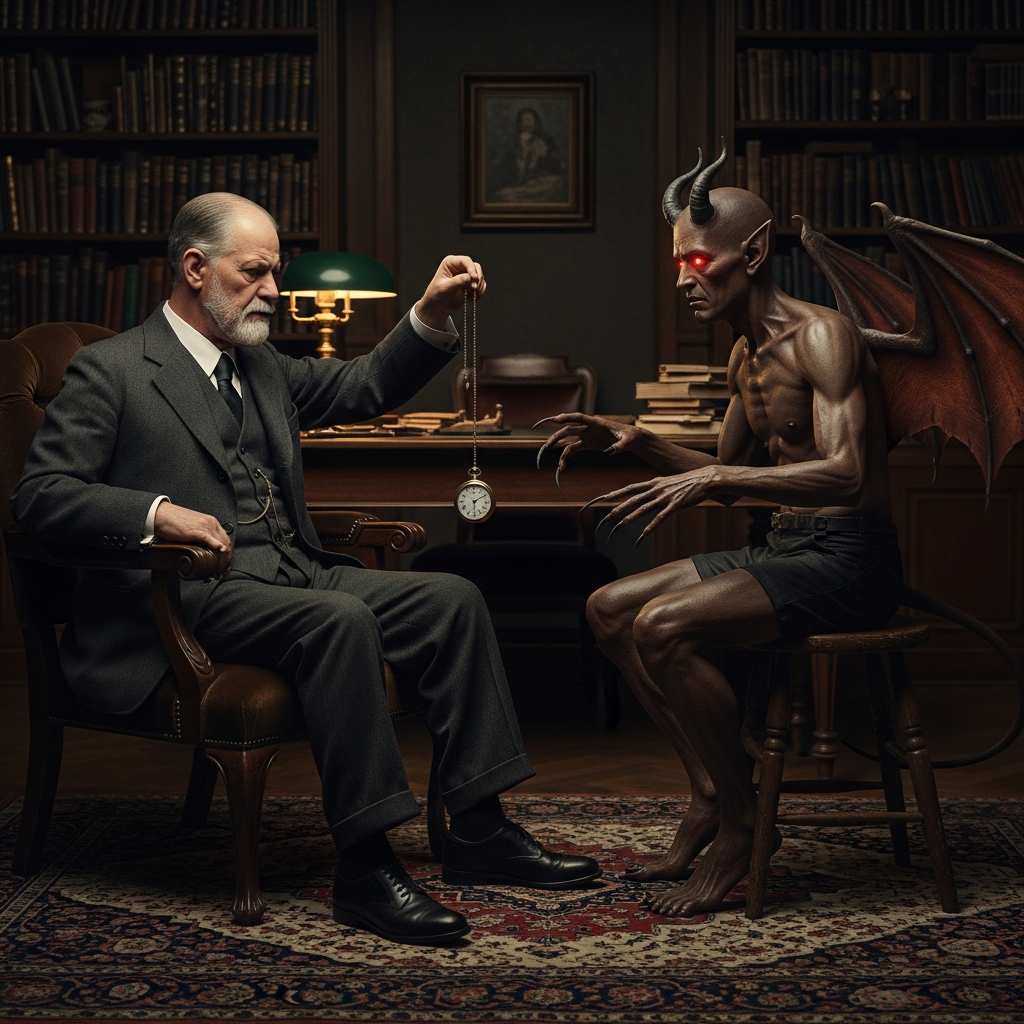
The DSM has undergone numerous revisions and overarching paradigm shifts of convention and theory since its inception. There's a lot of psychiatric expertise applied to such work, and there's more to be done.
Orthorexia Nervosa
Orthorexia Nervosa (ON) is a proposed eating disorder characterised by an extreme, obsessive fixation on "healthy" or "pure" eating. Coined in 1997 by American physician Dr. Steven Bratman (from the Greek ortho, meaning "correct," and orexis, meaning "appetite"), it describes a condition where the pursuit of optimal health paradoxically damages a person's physical and psychological well-being.
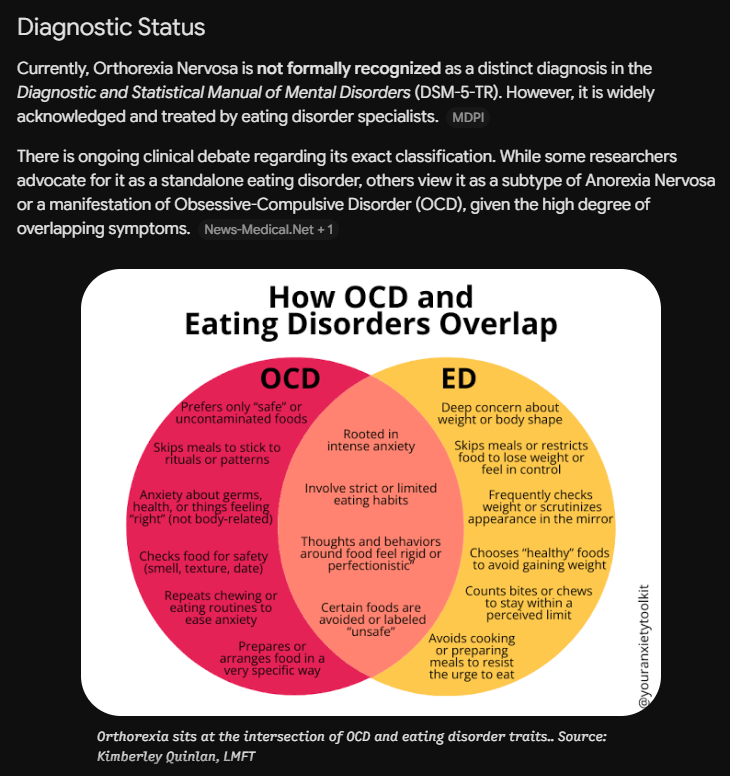
It's not in the DSM or ICD yet.
This outcome is pretty common due to the complexity of personality disorders, psychopathologies, comorbidities thereof, and the relationship between personality traits (extreme) and personality disorder traits.
Communal NPD
Communal NPD should almost certainly be in the DSM and ICD. (My pet theory is that a lot of psychologists and psychiatrists have traits or would score as communal NPD, which would be an impediment to inclusion.)
Communal Narcissism is a specific manifestation of Narcissistic Personality Disorder (NPD) where the core motives of grandiosity, entitlement, and the need for admiration are satisfied through prosocial, "helpful," or martyred behaviours rather than through traditional displays of power, intellect, or vanity.
First conceptualised by Gebauer et al. in 2012 (via the Communal Narcissism Inventory), it describes individuals who view themselves as the most caring, empathetic, and morally superior people in the room. They use altruism as a vehicle for ego-enhancement.
Diagnostic Status
Like Orthorexia, Communal Narcissism is not a distinct diagnostic category in the DSM-5-TR. The DSM treats NPD as a single, overarching construct characterised by a pervasive pattern of grandiosity, need for admiration, and lack of empathy.
However, in psychometric research and clinical practice, it is widely recognised that narcissism can be split into domains. While traditional (agentic) narcissism seeks validation through competence and dominance, communal narcissism seeks validation through warmth and self-sacrifice.
The Core Traits
Individuals with high communal narcissistic traits often present as highly agreeable and devoted on the surface, making this subtype particularly difficult to identify. Key markers include:
Performative Altruism: Charity or helpfulness is highly visible and often documented. The act of giving is secondary to the recognition received for it.
Moral Superiority: A deeply held belief that they are fundamentally more ethical, caring, and self-sacrificing than others. They may frequently express dismay at how "selfish" the rest of the world is.
The "Martyr" Complex: They often take on excessive burdens or obligations specifically to leverage them later, inducing guilt in others ("After everything I've done for you...").
The Hypocrisy Gap: Psychometric studies consistently show a massive discrepancy between a communal narcissist's self-reported prosocial behaviour and objective reality. They may claim to be excellent listeners but consistently dominate conversations, or advocate for human rights publicly while being highly vindictive in private relationships.
Key insight: A communal narcissist's lack of empathy is often masked by their helpfulness. Because their primary goal is to be seen as a savior, they frequently provide help that is entirely misaligned with what the other person actually needs or asked for.
HPD
HPD (Histrionic Personality Disorder) is in the DSM, but realistically probably shouldn't be. My hypothesis is that in all likelihood people are either misdiagnosed on the basis of cultural biases built into the conceptualisation of the disorder but they have nothing wrong with them, or else they're instead suffering from BPD/NPD.
The scepticism surrounding Histrionic Personality Disorder (HPD) is deeply embedded in modern psychiatric philosophy. The premise that HPD is an artefact of cultural bias—or simply a misclassification of Borderline (BPD) and Narcissistic (NPD) pathology—is exactly why there is a persistent movement to remove it from the DSM entirely.
Philosopher Carol S. Gould’s work, particularly her 2011 analysis Why the Histrionic Personality Disorder Should Not Be in the DSM, provides a rigorous anti-realist framework for this argument. She posits that HPD fails the test of being a true ontological personality disorder, classifying it instead as an "artificial kind" or "cultural disorder." To dismantle the validity of HPD, she heavily leverages Ian Hacking’s philosophy of psychiatric classification and his "looping effect."
Ian Hacking and the "Looping Effect"
To understand Gould's anti-realism regarding HPD, it is necessary to start with Hacking's hard distinction between two types of classifications:
Indifferent Kinds: Natural, mind-independent phenomena (e.g., quarks, plutonium, or cancer cells). A quark does not care that it is classified as a quark; the label does not change its physical behavior.
Interactive Kinds (Human Kinds): Social and psychiatric classifications (e.g., the "juvenile delinquent," the "multiple personality," or the "hysteric"). Because humans are conscious, meaning-making agents, applying a label to a person fundamentally alters how they perceive themselves, how society treats them, and how they behave.
Hacking argues that psychiatric diagnoses are interactive. When psychiatry creates a category, it creates a new way to be a person. Individuals diagnosed with the label interact with it—internalising it, performing its criteria, or rebelling against it. This creates a looping effect: the diagnosis shapes the patient's behavior, which in turn reinforces the psychiatric community's belief that the category is a real, naturally occurring disease.
Gould's Anti-Realism Applied to HPD
Gould applies Hacking’s looping effect to argue that HPD does not carve human psychology at its natural joints. It is socially constructed through and through.
Pathologising Femininity: Gould notes that the criteria for HPD (rapidly shifting emotions, theatricality, suggestibility, use of physical appearance for attention) are essentially a caricature of traditional, stereotypical femininity. HPD is the direct historical descendant of "hysteria"—a diagnosis historically weaponised to pathologise outspoken, intense, or emotionally expressive women.
The HPD Loop: Through Hacking's lens, the "histrionic" patient is caught in a social feedback loop. A patriarchal culture prescribes a narrow, contradictory script for how women should express emotion, seek validation, and weaponise their appearance. When a woman exaggerates these culturally ingrained traits—often as a maladaptive survival mechanism or a way to navigate a society that limits female agency—she is slapped with a psychiatric label. The label then reinforces the stereotype. The patient may unconsciously lean into the "sick role" prescribed to her, which clinicians observe and use to validate the DSM's artificial construct.
A "Cultural Disorder": Gould concludes that ontologically, HPD is not a medical pathology. The dysfunction lies not in a broken biological mechanism within the individual, but in the friction between a person's interactive style and the rigid gender norms of the society evaluating them.
The Taxonomic Failure (The BPD/NPD Overlap)
Gould and other anti-realists also highlight that HPD fails the fundamental taxonomic requirement of distinctness.
Gould argues that unlike Antisocial (ASPD), Borderline (BPD), and Narcissistic (NPD) disorders, HPD lacks a distinct core of severe negative ethical implications or stable, destructive intrapsychic pathology. When genuine, debilitating psychological distress is present in someone labeled with HPD, the symptoms map almost entirely onto other Cluster B architectures:
The BPD Misdiagnosis: When the "excessive emotionality" and "attention-seeking" are actually driven by a frantic fear of abandonment, a shattered sense of self, and severe emotional dysregulation, the accurate, naturally occurring mechanism is Borderline pathology.
The NPD Misdiagnosis: When provocative behavior, superficial charm, and the need to be the center of attention are driven by grandiosity, entitlement, and a need for external validation, it represents somatic or exhibitionistic Narcissistic pathology.
Because HPD lacks a natural basis, relies on subjective cultural judgements of "appropriate" emotional expression, and acts largely as a gendered descriptor for underlying BPD or NPD, anti-realists argue it belongs in the history books alongside hysteria.
A Common Occurrence
What I have called religious schizophrenia disorder (involving beliefs in the material interventions of supernatural and magical forces like demons and gods) is so widespread that it might never make it into the DSM on the basis of also being a widespread cultural disorder in Gould's sense. It's probably properly a delusional disorder or a variety of psychotic disorder. This might require the DSM to be updated to a properly dimensional diagnostic system like the ICD.