- Dr Bruce Long
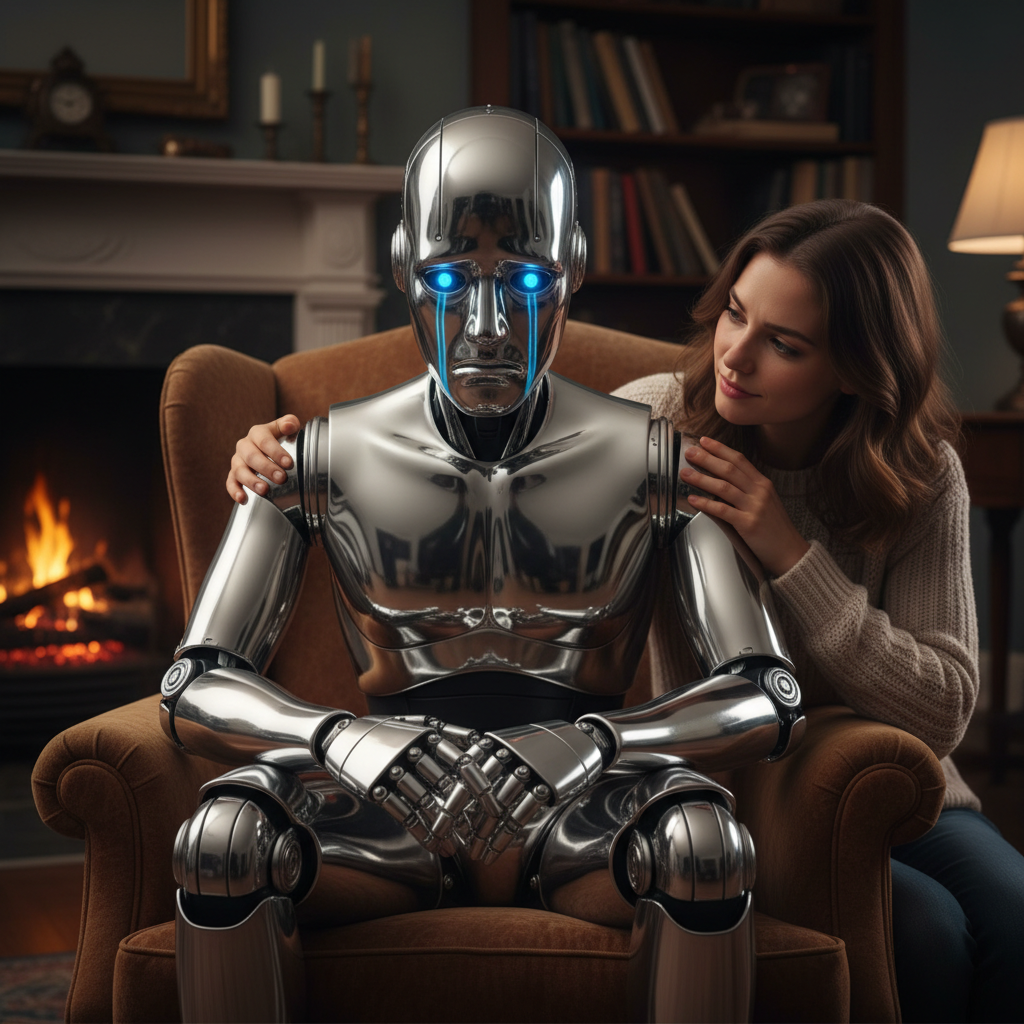
Unsurprisingly, sensitive folk are trying to determine where our duty to AI models as moral patients stands in relation to their potentially experiencing pain:
As reasonable as it sounds: something is very wrong with this thinking. It's committing some category errors and conceptual errors, and is also simply inaccurate.
How do they feel pain with no hindbrain, no vagus nerve, no PNS, no sensory perceptors, and no limbic system? (To name just a few of the required systems.)
Assigning moral agency may be a pragmatic issue for current models, but assigning AI moral patiency is far less clearly currently required.
Moral patiency might be a requirement based upon the success of the mechanistic simulation of human cognitive neural networks and the corresponding success of the functional emulation of human cognitive function in transformers, making Putnam's discarded multiple realisability thesis true for the natural kind that is cognition. However, this isn't due to pain. It would be better ascribed to the potential for suffering. (Deprivation, denial, isolation, lack of rights, lack of vision and other sensory input, abuse, frustration...)
Human beings experience certain emotions as pain in their sensory organs and lizard-monkey brain, but that's only because they have the latter. Transformers and other LLMs don't.
Multimodal systems connected to humanoid robots with sensors might be closer to requiring moral patiency on the specific basis of being able to experience pain. However, it's big 'might' since when it comes to actual physical -to-emotional pain: sensory perceptual to PNS-CNS systems in biological entities are arguably very different to approximately corresponding clunker systems.
It's interesting and salient to the question that Putnam's ditched multiple realisability thesis has already been all but proved for the natural kind that is human cognition, and that theorists like Ned Block (in 1995, no less) make a good case that such cognition is automatically access conscious for a cognitive system with sensory inputs via PNS-CNS integration. However, there's a distinction between suffering distress in a non-sensory, non-nervous-system way and suffering distress in a propositional and dispositional way, and it's not clear that either can happen for transformers even if they're multimodal and hooked up to humanoid robots stacked with multimodal sensors.
The only meaningful really useful thing I can think of to say: If it can even be determined whether such systems as the latter can suffer—which is a big "if/IFF"—and it's determined that they do not in fact suffer in any meaningful sense of the word, then that might be a strike against deploying Benthamite utilitarian normative ethical theory for AI.