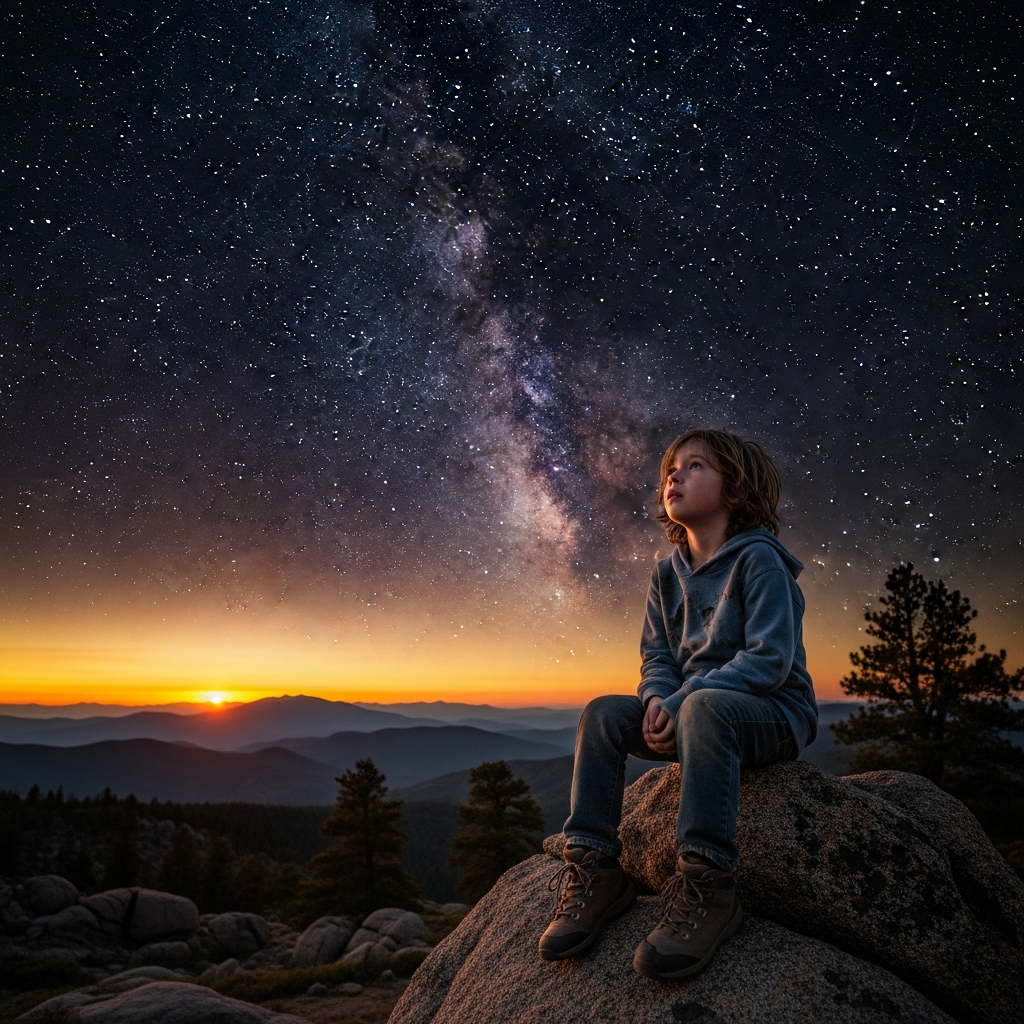
The question may not be whether machines can be artists, but where authorship lies in a constrained creative pipeline.

The Question That Defines its Own Answer
In his writing on the subject, philosopher Mark Coeckelbergh observes that questions about whether machines can create art tend to be settled by definition before any work is examined. The debate often centres on prerequisites like intention, originality, or the artist’s inner life—qualities that, by their very framing, a machine is presumed to lack. This approach is philosophically tidy but practically unsatisfying. It closes the conversation just as it gets interesting, preventing a serious look at the creative objects themselves and the processes that produce them.
If the traditional criteria for artistry lead to a dead end, perhaps the criteria themselves are worth re-examining. The challenge is not to find a way to attribute an inner life to a machine, but to find a more productive question.
From Abstract Author to Constrained Choices
An alternative framing emerges when we consider how sophisticated AI cinematography platforms actually function in practice. As outlined in Bruce Long's philosophical work, this is not a process of handing authorship over to a black box. Instead, it is a collaboration governed by rigorous constraints. A director using a system like Arcanamatic's NeuraScene does not simply type a request and hope for the best. They make a series of precise, consequential decisions.
They select an historical era, a cinematic genre, a specific camera body, a lens with a fixed focal length, and a particular film stock. The system's role is not to invent freely, but to enforce the consequences of those choices. It understands the grain structure of Kodak Tri-X, the optical distortion of a 1970s anamorphic lens, and the way a specific film emulsion responds to underexposure. The platform’s creativity is expressed in its rigorous adherence to the physical and historical limitations defined by the director. This relationship is closer to a cinematographer’s dialogue with their equipment than it is to a surrender of creative control.
A Question of Distribution
This suggests a shift in the fundamental question. Instead of asking a binary, yes/no question of whether the machine is an artist, we could ask a more nuanced one: in a pipeline with many constrained choices, where does the locus of authorship sit?
- Is it with the director who defines the entire aesthetic and technical framework?
- Is it partially held by the system that faithfully simulates the complex interactions of light, lens, and emulsion?
- Is it found in the interplay between the two?
Authorship, in this view, is not a single point but a distributed quality. It is a matter of degree and distribution, not a simple pass or fail based on a romantic conception of the lone, inspired artist. It becomes a practical question that can be examined case by case, rather than a metaphysical one that cannot.
It is important to state that this reframing is a suggestion for a more productive inquiry, not a settled answer. Crucially, it does not touch the harder, perhaps intractable, question of whether a system could ever possess the kind of consciousness or inner life that the traditional definitions of art require. But by focusing on the observable process of creation, it allows us to engage with the work that AI is producing today on more solid ground.
Method note. This piece was built in NeuraScene's Advertising Mode using an explicit psychological frame:
- Persuasion trigger: The Halo Effect
- Target affect: Frisson
- Gestalt principle: Common Region
The Halo Effect is optimal: a rigorous, intellectually honest article creates a positive impression that transfers to the Arcanamatic brand. Frisson is targeted by offering a moment of elegant clarity in a complex debate. The image uses Common Region to metaphorically represent the constrained creative pipeline, visually grounding the article's central thesis.