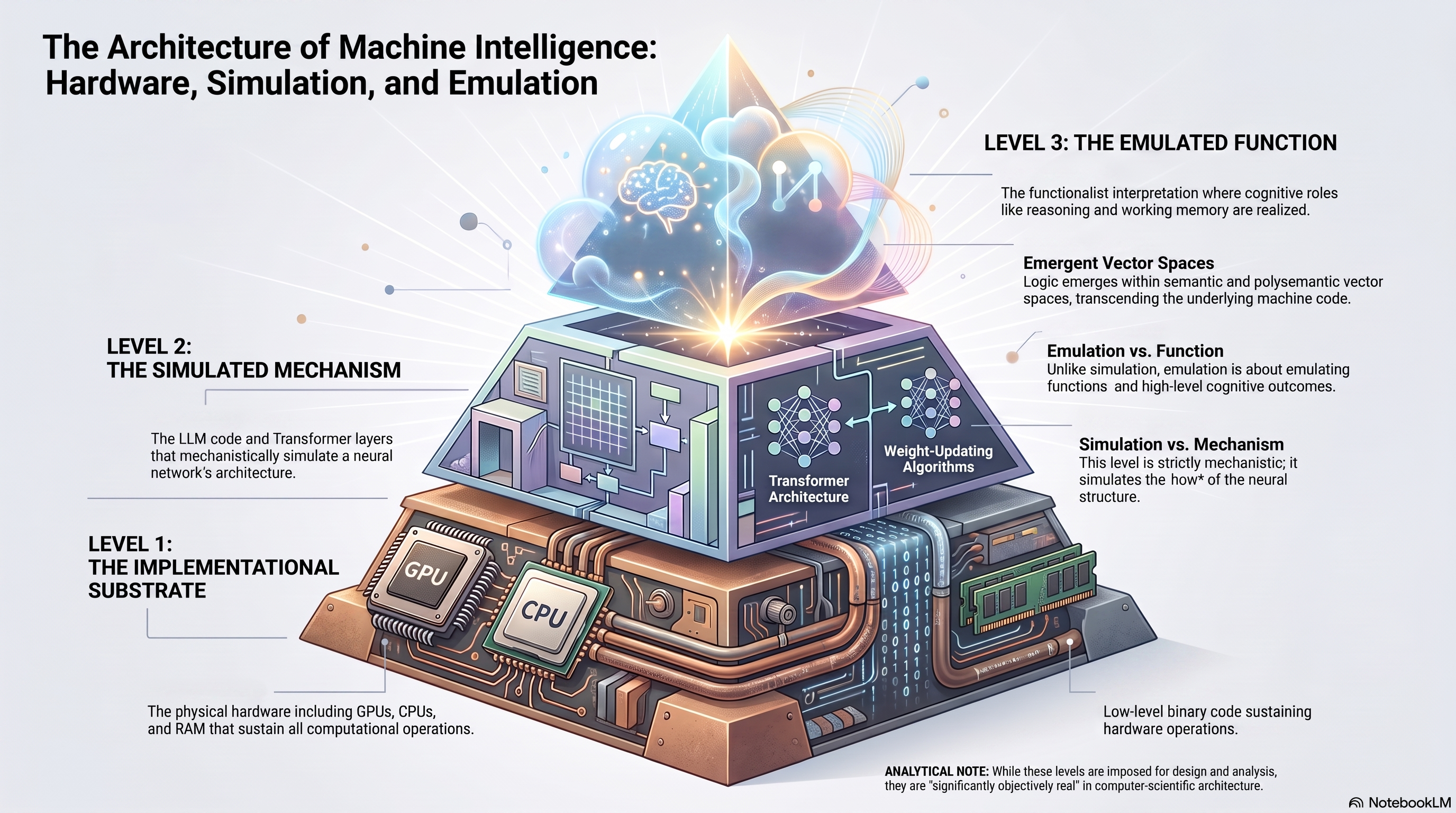
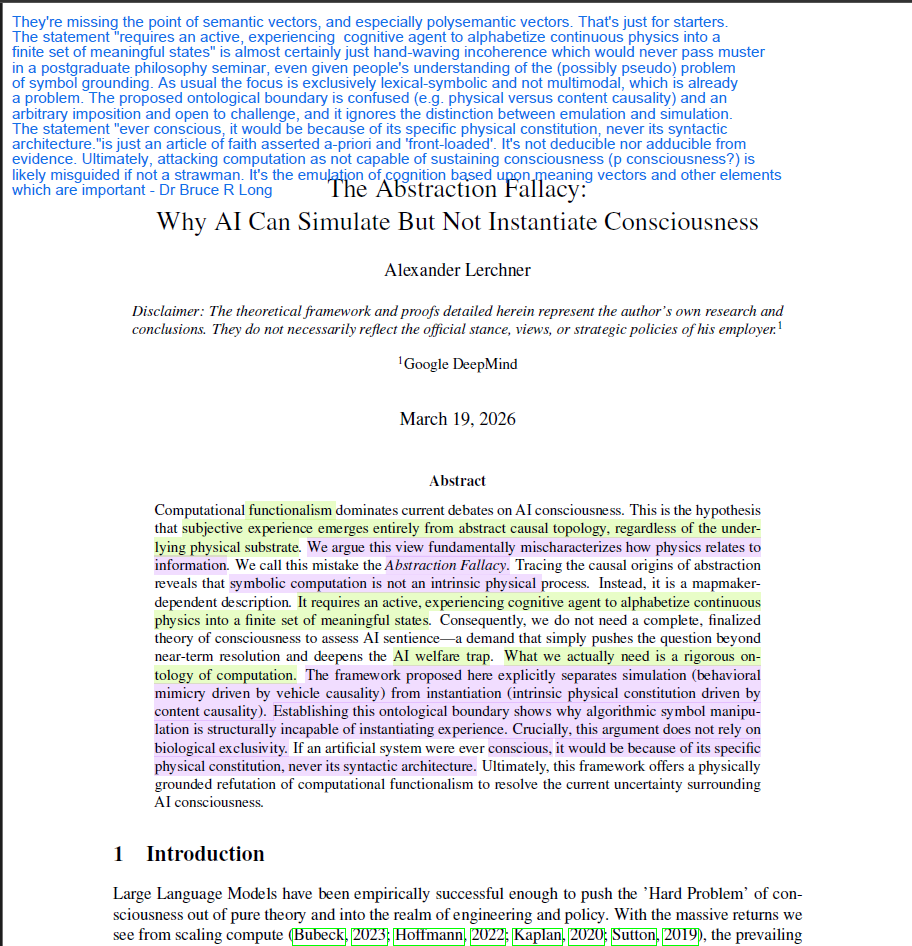
I am up to my butt in flaming Komodo dragons and so can't do a full rebuttal yet (see the image and link below for Lerchner's paper), but the problems already apparent (based upon my rigorous, elite philosophy PhD training at The University of Sydney) in the abstract are enough to suggest it would be punching down and not a valuable use of my time. The author is just not careful or pedantic enough, and although they are across some of the salient debates, they miss or omit others which are critical for them to address. They already commit some newby errors in the Abstract which say "don't bother."
https://philpapers.org/archive/LERTAF.pdf
If anyone wants to fund a rebuttal paper (i.e. give me money to do it!) however: dr.bruce.long@outlook.com and b.long@westernsydney.edu.au or else submit an enquiry through brucerlong.xyz . USD$7500 o.n.o
I am teaching senior Ethics and AI this semester and the first three lectures deal with the ontology of AI and the nature of AI. Why? Arguably it is tough to do a normative and applied ethics for using AI and for AI as a potential moral patient/agent if the nature of AI 'cognition' is sufficiently obscure.
On the other hand: normative ethicists and meta-ethicists have exactly the same problem for humans! In other words, the epistemic access problems underpinning Putnam's multiple realisability debate which Lerchner's paper unknowingly (?) engages are still an open debate/question for humans too. Just because we have more clue what is going on in transformers because we designed and built them doesn't necessarily either imply or entail that the same problems regarding consciousness and multiple realisability of cognition/consciousness don't translate/move across to LLMs too.
(By the way by the way: multiple realisability was originally a thesis about cognition and--at best--access consciousness or conscious awareness of the kind psychological scientists are okay with, but in principle it arguably applies to p-consciousness or phenomenal consciousness, especially if the latter is still based upon cognitive information processing. It might not be, but I am no panpsychist. Uh uh.)
@DarioAmodei @sama @Alibaba_Qwen @Kimi_Moonshot @GoogleDeepMind @AnthropicAI @deepseek_ai