The insight at the end of this short interview excerpt about AI has some traction (although it underestimates models like Opus 4.6 and Gemini 3.1), but I find the comments about client support jobs quite perplexing.
Surely with those types of roles the elephant in the room is the kind of hells that capitalist economies with inequalities across the board deliver people into to make them suffer just so they can survive and not thrive?
Psychological researchers (should) know very well that some of the most deleterious stressors working people experience are interpersonal conflict, financial stress/distress/lack/un-fluidity, and soul-crushing banality.
The elephant in the room is that kind of role, which capitalism, the service economy, and inequity create. It's not healthy for anyone. Bus drivers, nurses, teachers, store clerks, and service industry workers all have the same problem: constant exposure to goobermenschen who are at the bottom of the barrel. (I am a utilitarian absurdist at heart, and so in my view the less humans suffering, the better. I don't want anyone at the bottom of the barrel. It's suffering.)
These bad-job inequities have been around as long as capitalism itself. Who does the shit jobs? The poor, uneducated, ungifted (including the intellectually average), and unlucky. (Not to mention slaves, abused P.O.Ws, and minorities who are the victims of racism and other bigotry.)
Can you imagine a bus driver or a nurse asking their private employer for what they really need and what they should get in a decent society: serious danger money and bonuses for the immense damage incurred by them in being exposed to all of that fiscal, interpersonal, psychological, psychosocial, and social violence of their jobs?
Bus lines are always advertising for new drivers. I doubt corrective services and teachers have much lower turnover. Guess why. Ask an insurance company risk/insurance assessor. They're high risk exposure roles with a lot of social and interpersonal violence, and a lot of chronic illness exacerbated by the very bad stress that goes with them.
In relation to capitalism-driven, service industry, table-crumbs shit jobs for the underprivileged and unlucky: Sorry, but are we going to be honest, or are we going to wave our hands and ignore the real problem?
Sure, making all of the tasks the hard tasks is unhealthy, but padding them out with mind-numbingly banal tasks is going to send any normal human to an early grave sick, and make their life experience horrible on the way.
Solutions
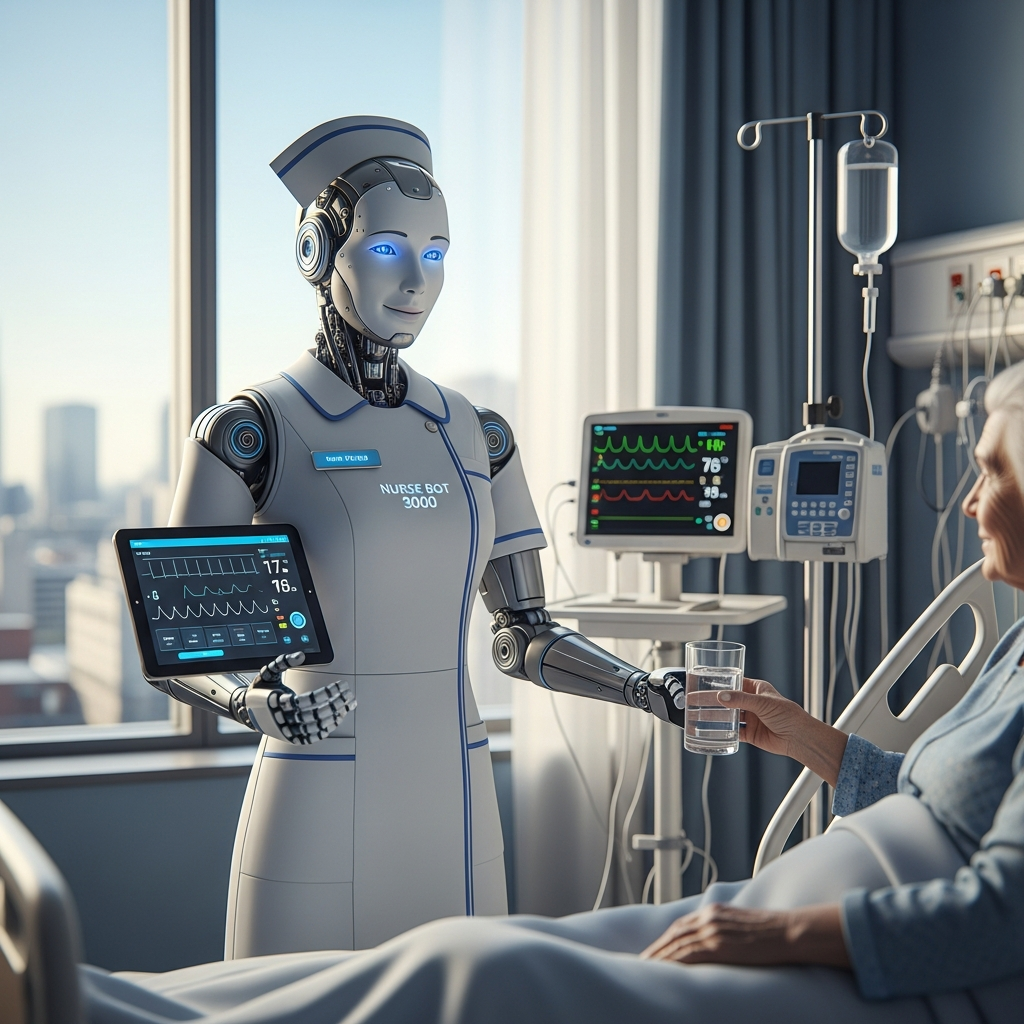
While nurses will have to wait about five years to be replaced by humanoid robots, bus drivers should already be given an income when they're replaced by self-driving buses, perhaps with more money added for voluntarily helping to train the bus-driving AI.
There's no reason a bus driver with an average IQ can't be used in a simulator - or even a real bus - to help train the auto-driving AI. They don't have to do the bus role. They can play the part of the erratic humans in the environment jumping out from behind advertising signs and shooting through red lights in utility vehicles and on pizza rods.
Economically, however, the best civilisational - and civilised - plan is probably to give the bus driver a pension for their lost role because the AI will be much cheaper to use to run the bus service, and then allow them to get more training and/or get another job if they wish (and still pay them the AI-retired bus driver's pension).
Once the AI collective brain is in the server, it's just a matter of getting the hardware into the bus, and once that's reached volume production (which is pretty quickly given the number of buses) there are hardly any ongoing costs compared to human drivers. Getting the technology in the first place is the hard part. That's done. With the amount of volume involved and the degree of proliferation, that's paid for pretty fast. Even if it's not paid for fast, it's a guaranteed, locked in profit stream in perpetuity. There's plenty of fiscal space for the bus driver AI-pension plan. (I'm calling it a pension, but the AI-retired driver can be 21 and not disabled.)