-Bruce R. Long
I don't normally post LLM responses unless it's a marketing blurb or I am having a philosophical argument or discussion with the LLM, but this one is high value and I thought I'd share it.
Me:
Explore and compare narrative therapy versus schema therapy. Particularly, compare narratives and schemas as defined by each therapeutic mode/theory respectively. Discuss grades of evidence. Discuss theoretical soundness. Appraise narrative therapy using Galen Strawson's essay "Against Narrativity" and determine if it has traction as a criticism of narrative therapy.
Gemini 3.1 Pro:
This is a rigorous and fascinating comparison. You are looking at two therapeutic modalities that operate from entirely different epistemological universes: Schema Therapy is deeply rooted in cognitive science, evolutionary psychology, and the medical model, while Narrative Therapy emerges from postmodernism, post-structuralism, and sociology.
Here is an exploration of how these therapies conceptualize the mind, the evidence supporting them, their theoretical soundness, and how Galen Strawson’s philosophical critique applies to the narrative approach.
1. The Ontology of the Mind: Narratives vs. Schemas
The fundamental difference between these two therapies lies in how they define the structures that govern human behavior and distress.
Schemas (Schema Therapy)
Developed by Jeffrey Young, Schema Therapy posits that the mind organizes reality through Early Maladaptive Schemas (EMS).
Definition: Schemas are broad, pervasive cognitive and emotional themes—comprising memories, emotions, cognitions, and bodily sensations—developed during childhood and elaborated throughout one's lifetime.
Nature: They are rigid, trait-like, and deeply embedded neurological templates. They are not merely "stories" we tell; they are the filters through which reality is perceived. If a person has a "Defectiveness" schema, their brain structurally prioritizes data that confirms their flaw and discards data that contradicts it.
Locus of Control: Internal and structural. Healing requires cognitive restructuring, experiential/emotional processing, and behavioral pattern-breaking to build healthy "Adult" modes that can bypass or soothe the schema.
Narratives (Narrative Therapy)
Developed by Michael White and David Epston, Narrative Therapy asserts that identity is shaped by the narratives or stories people construct about their lives.
Definition: Narratives are sequences of events linked across time according to a specific theme. People construct "problem-saturated stories" that come to dominate their identity (e.g., "I am a failure").
Nature: Narratives are socially constructed, fluid, and heavily influenced by dominant cultural discourses (e.g., capitalism, patriarchy, psychiatric labels). They are not innate neurological structures, but linguistic and social frameworks.
Locus of Control: External and linguistic. "The person is not the problem; the problem is the problem." Healing involves externalizing the issue, deconstructing dominant cultural discourses, and "re-authoring" a preferred, alternative narrative.
Feature | Schema Therapy | Narrative Therapy |
Epistemology | Empiricist / Realist | Postmodern / Constructivist |
Core Mechanism | Cognitive-emotional templates (EMS) | Socially constructed stories |
View of the Past | Deterministic (childhood unmet needs) | Interpretive (meaning-making) |
Therapeutic Goal | Schema healing and mode management | Re-authoring identity |
Role of Therapist | Limited reparenting / authoritative guide | Co-author / de-centered collaborator |
2. Grades of Evidence
The empirical standing of the two modalities reflects their underlying philosophies.
Schema Therapy: High-Grade Empirical Evidence
Schema Therapy was built to treat populations that failed standard CBT, particularly those with Borderline Personality Disorder (BPD). Because it aligns with the medical model, it is highly manualized and measurable.
Evidence: It is supported by numerous Randomized Controlled Trials (RCTs). It is considered an Evidence-Based Treatment (EBT) for personality disorders, chronic depression, and complex trauma.
Measurability: Schemas are quantifiable. Psychometric instruments like the Young Schema Questionnaire (YSQ) allow researchers to establish baselines, track changes, and validate the therapy's efficacy mathematically.
Narrative Therapy: Low-to-Moderate Empirical Evidence
Narrative Therapy actively resists the medical model and quantitative measurement. Its founders viewed standardized testing as an instrument of oppressive, normative social power.
Evidence: The evidence base consists primarily of qualitative research, case studies, and theoretical papers. While there is a growing push to subject it to RCTs, the results are sparse compared to cognitive therapies.
Measurability: It is inherently difficult to manualize. How does one quantify the "deconstruction of a problem-saturated story"? Because it values subjective meaning over objective symptom reduction, it frequently fails to meet the gold standards of psychiatric research boards.
3. Theoretical Soundness
Schema Therapy is theoretically robust within the paradigm of modern psychological science. It successfully integrates attachment theory, cognitive-behavioral principles, and developmental psychology. Its constructs map cleanly onto current understandings of neurobiology (e.g., the amygdala's role in emotional memory vs. the prefrontal cortex's role in cognitive restructuring).
Narrative Therapy is theoretically sound within the paradigm of sociology and literary theory (relying heavily on Michel Foucault's concepts of power and knowledge). However, its psychological soundness is often critiqued. By entirely externalizing the problem ("The person is not the problem"), it risks ignoring biological, neurological, or deeply ingrained trait-based realities of severe psychopathology (such as psychosis or severe personality disorders).
4. Appraising Narrative Therapy via Galen Strawson’s "Against Narrativity"
Galen Strawson’s 2004 essay Against Narrativity serves as a profound and devastating critique of the core assumptions of Narrative Therapy, even though it was aimed at philosophy and psychology more broadly.
Strawson attacks two fundamental claims made by narrative proponents:
The Psychological Narrativity Thesis: The claim that human beings naturally and universally experience their lives as a narrative or story.
The Ethical Narrativity Thesis: The claim that experiencing life as a narrative is a good thing, and is essential for a well-lived, healthy life.
Strawson’s Diachronic vs. Episodic Distinction
Strawson argues that there are deeply different ways people experience their "self" in time:
Diachronic: People who naturally see themselves as a continuous entity over time. The "I" who is writing this is the exact same "I" who was a child. These people naturally narrativize.
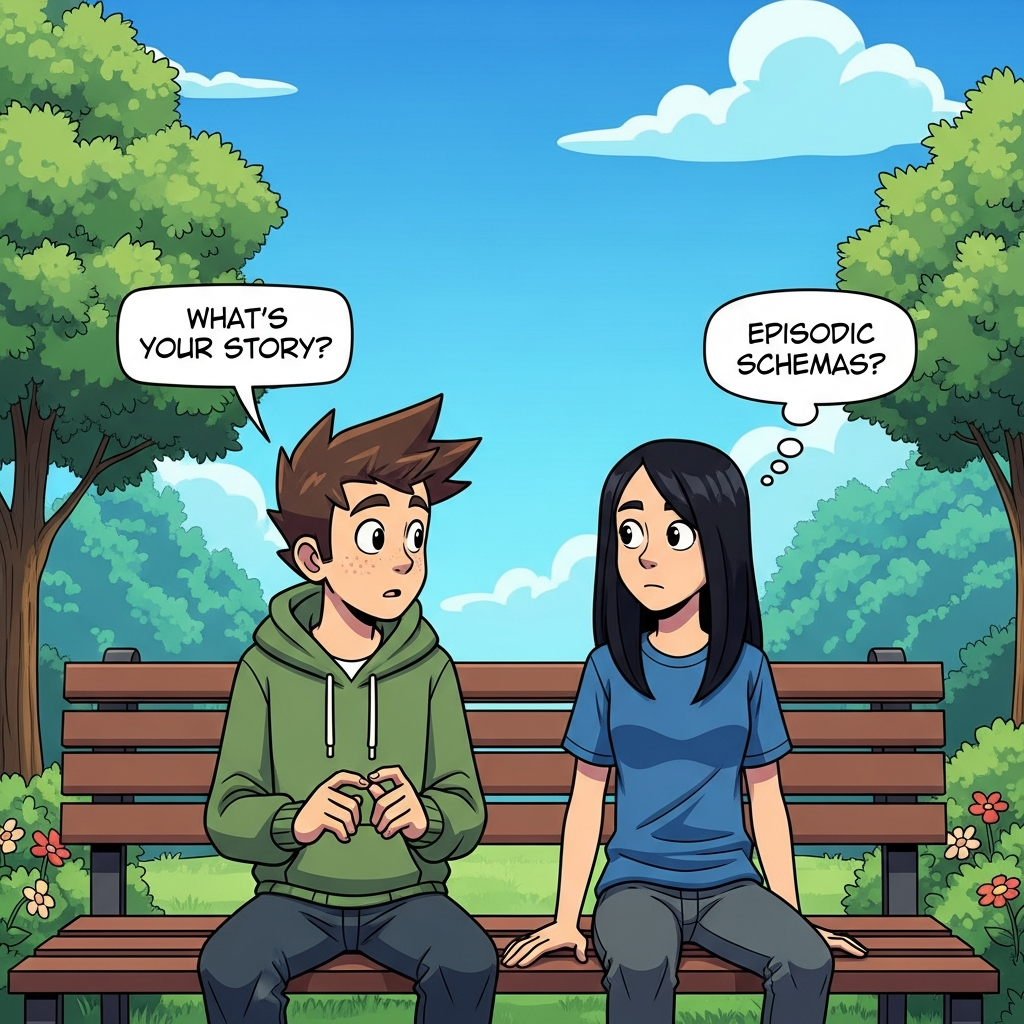
Episodic: People who experience the "self" primarily in the present moment. The past self who did things years ago feels like a different person. They do not naturally string their life events into a coherent, overarching story, and they feel no psychological necessity to do so. (Strawson identifies himself as Episodic).
Traction as a Criticism of Narrative Therapy
Strawson’s essay has immense traction as a critique of Narrative Therapy.
Narrative Therapy relies entirely on the Ethical Narrativity Thesis. It assumes that psychological distress is caused by bad stories, and psychological health is achieved by constructing good, coherent stories.
If Strawson is right, Narrative Therapy is committing a theoretical overreach:
Forced Narrativization: By assuming everyone must re-author their life story to heal, Narrative Therapy forces Episodic individuals to engage in a psychological exercise that is entirely alien to their natural neuro-cognitive baseline.
Pathologizing the Episodic: Narrative therapy implicitly pathologizes a lack of a coherent life story. For an Episodic person, an unconnected, un-storied life is normal and healthy. Forcing them to find a "theme" or "alternative narrative" may induce feelings of inauthenticity, confusion, or inadequacy.
The Falsity of Coherence: Strawson argues that narrativizing often demands making up fictions to force reality to fit a neat arc. Thus, Narrative Therapy might not be helping patients find the "truth," but rather encouraging them to fabricate self-serving confabulations to satisfy the therapeutic demand for a story.
While Schema Therapy seeks to dismantle rigid, maladaptive structures so the patient can simply be in the present without emotional flashbacks, Narrative Therapy demands the constant labor of authorship. Strawson effectively points out that for a significant portion of the population, the demand to be an author of one's life is not liberating—it is an artificial and exhausting constraint.